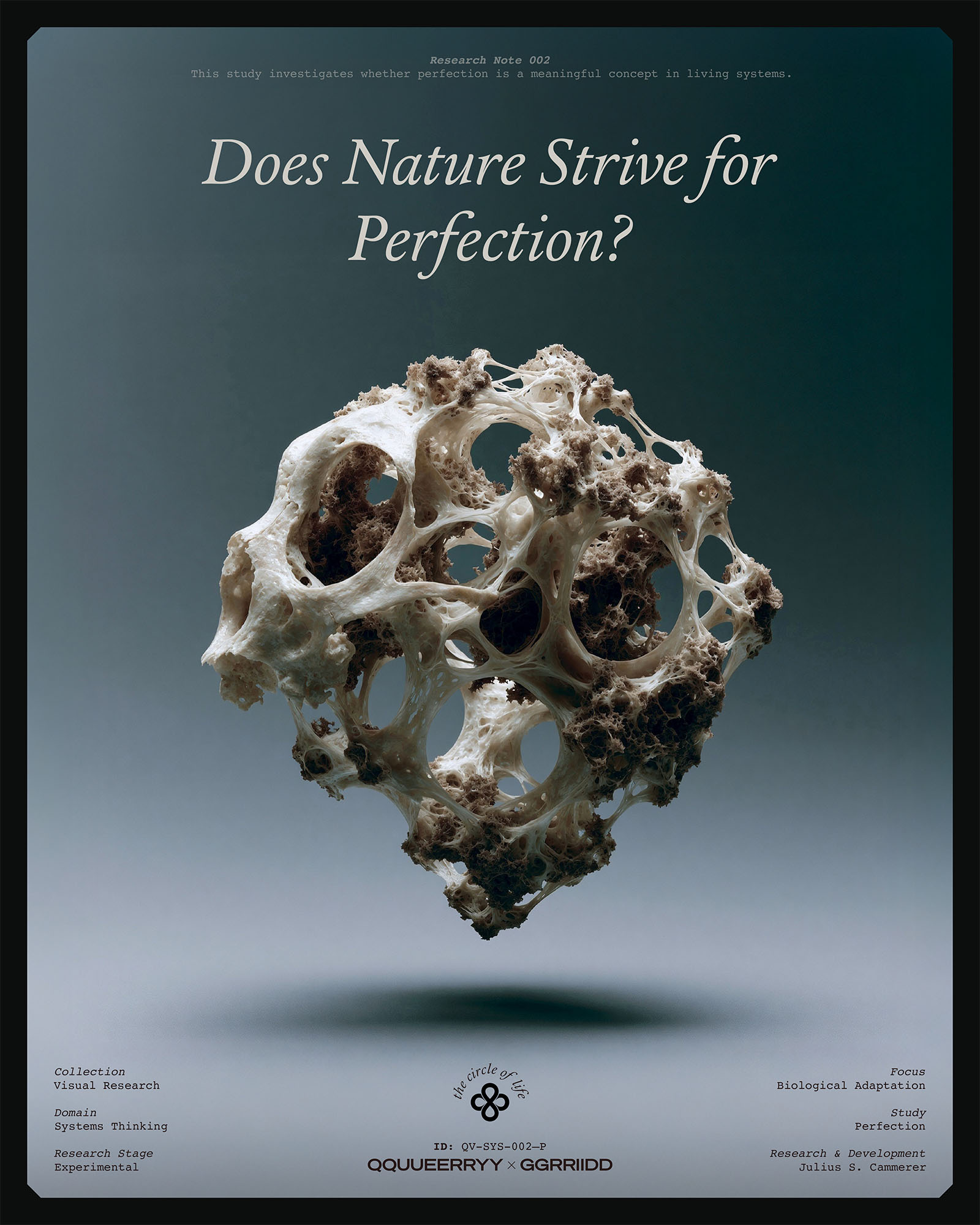
Research Note 003
Systems Thinking · Visual Research
The Question
The way we describe a problem often determines the way we search for a solution.
One of the most common ideas in design, innovation and business is that progress begins by identifying a problem and solving it. Entire methodologies have been built around this assumption. We speak about problem solving, solution finding and optimization almost instinctively. But what if this language is uniquely human? The more I study living systems, the more I notice that biology rarely describes life in these terms. Scientific literature speaks of adaptation, variation, feedback and selection. It rarely speaks about problems waiting to be solved. This Research Note begins with a simple question:
Do living systems actually solve problems?
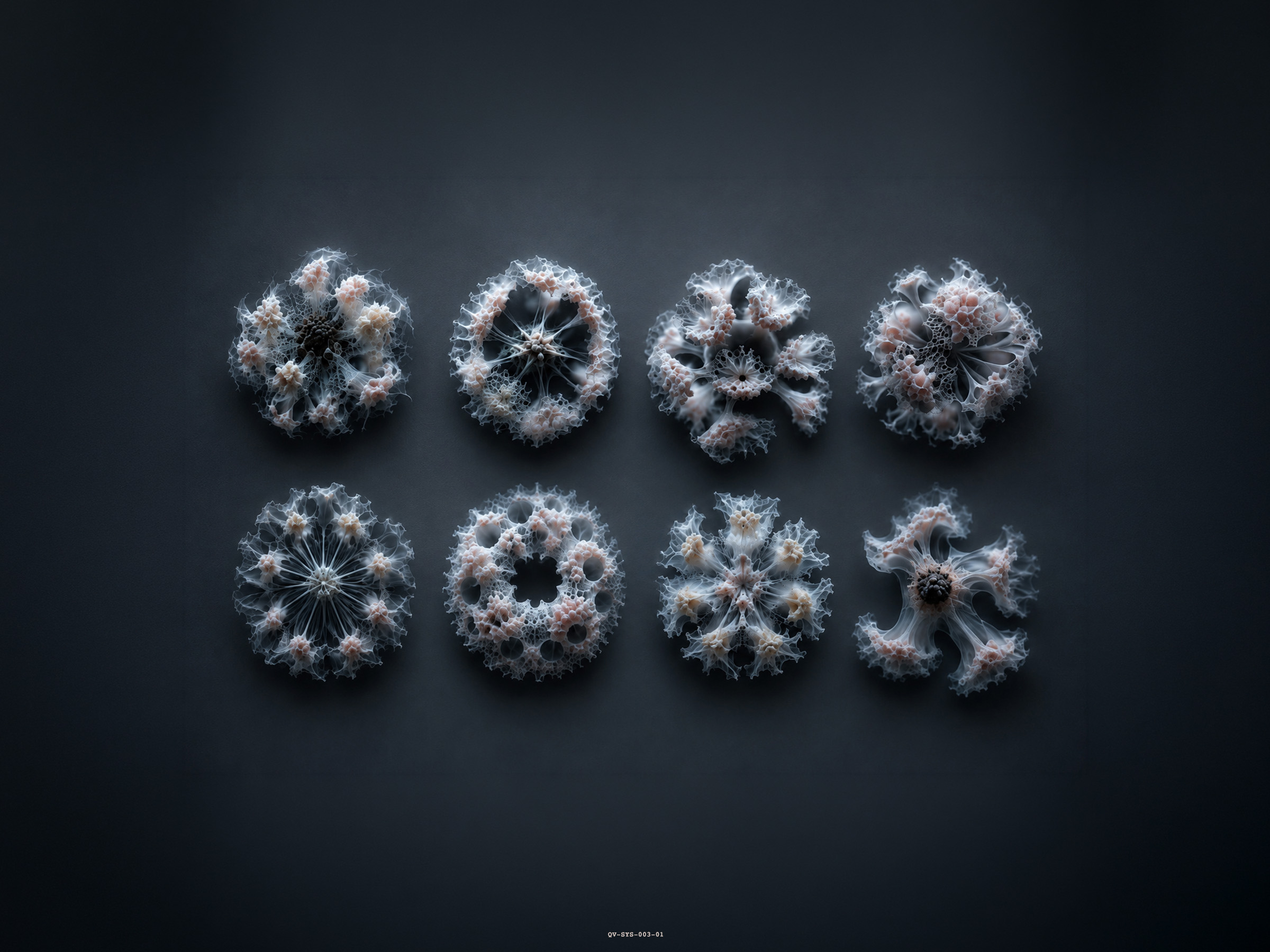
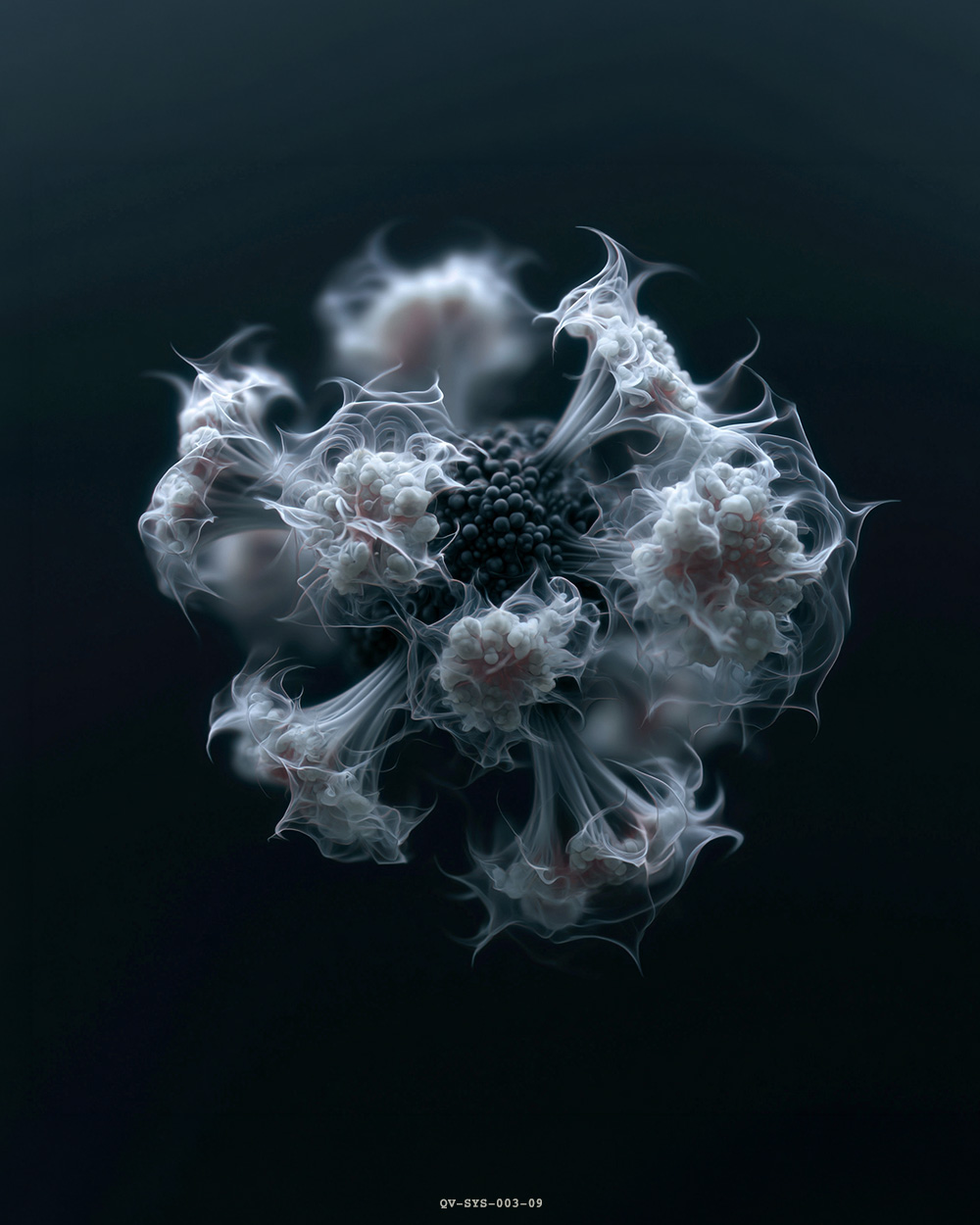
(Visual Study 003)

Looking Through a Different Lens
When an organism encounters a changing environment, nothing suggests that it first defines a problem before generating a solution. Instead, biological systems continuously reorganize themselves.
- Cells communicate.
- Materials change.
- Structures reorganize.
- Populations vary.
Organisms survive not because they found the right answer, but because they remained capable of responding to change. Perhaps adaptation is not the result of problem solving. Perhaps adaptation is simply how life exists.

Living systems rarely appear to solve problems. They continuously respond to changing conditions.
The Language We Choose
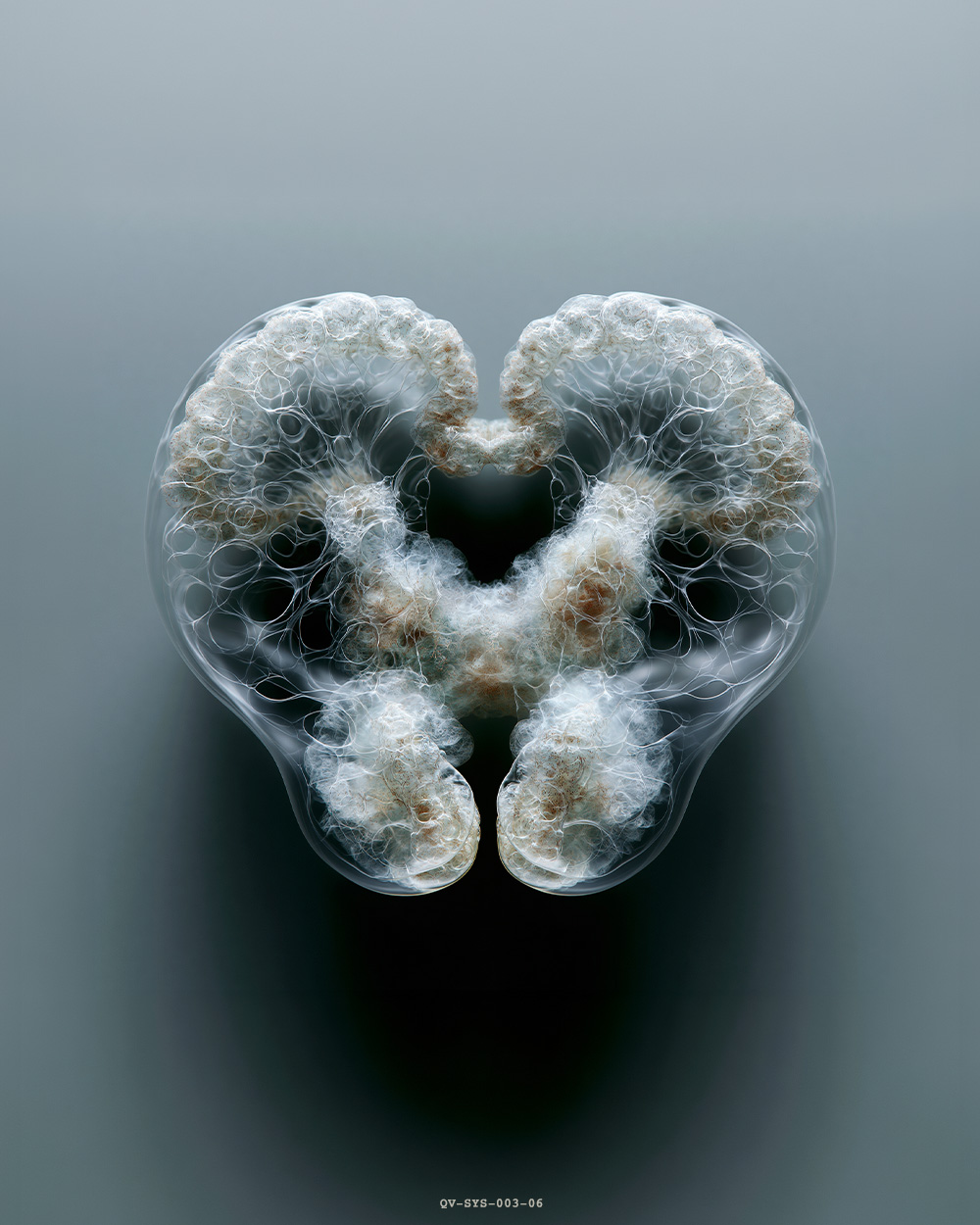
Nature suggests something different. Living systems remain unfinished. Every adaptation creates new possibilities. Every environmental change creates new conditions. There is no permanent solution because there is no permanent environment. Life appears to optimize for continued responsiveness rather than final optimization.
From Biology to Design
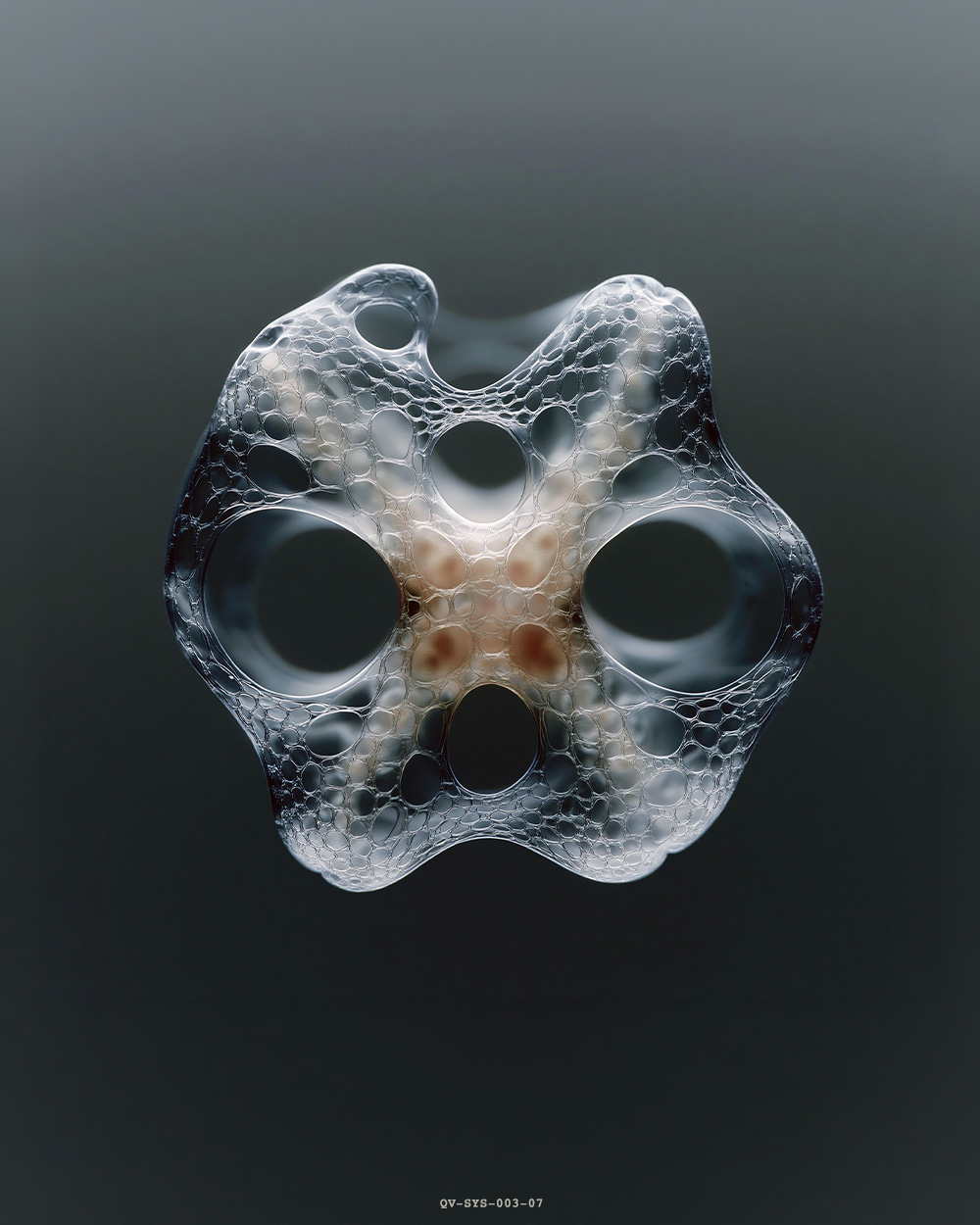
This observation has implications far beyond biology. If living systems do not solve problems but continuously reorganize themselves, what does this mean for design? Perhaps the role of design is not to produce perfect solutions. Perhaps it is to create systems that remain capable of learning, adapting and responding long after they have been built. This shifts the designer’s role from solving isolated problems toward designing conditions for continuous adaptation. It changes not only what we create, but how we think.
Reflection
This Research Note does not argue that problems do not exist. Rather, it questions whether problem solving is the most meaningful way to describe how living systems operate. Perhaps what we call a solution is often nothing more than a temporary state within an ongoing process of adaptation. If so, one of the most familiar concepts in design may deserve to be reconsidered. Not because it is wrong. But because biology may be speaking a different language.
Continue the Research
Every Research Note documents the current state of an ongoing investigation. It is not intended as a final answer, but as an invitation to continue asking better questions.
Research Information
Research Note: RN-SYS-003
Research ID: QV-SYS-003
Collection: Visual Research
Domain: Systems Thinking
Focus: Adaptive Biological Systems
Study: Adaptive Responses
Research Stage: Working Hypothesis
Status: Version 0.1
Last Updated: July 2026
References
- Darwin, Charles. On the Origin of Species.
- Mayr, Ernst. What Evolution Is.
- Futuyma, Douglas J. Evolution.
- Odling-Smee, Laland & Feldman. Niche Construction.
- Meadows, Donella. Thinking in Systems.
Wo in deinem aktuellen Tun ist mehr da, als gerade sichtbar ist?
Lass uns darüber sprechen.