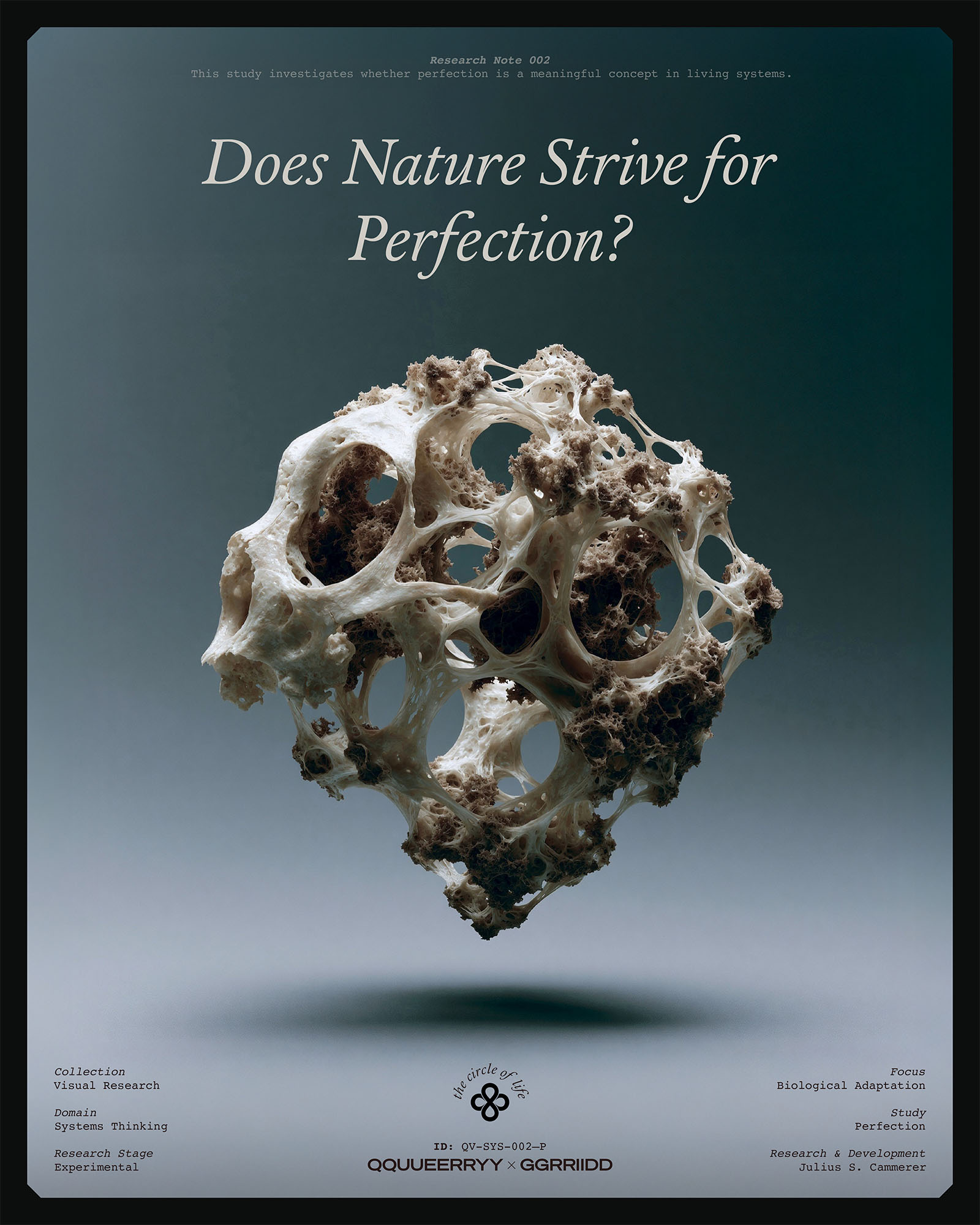
Research Note 002
For centuries, perfection has been treated as something worth pursuing. We optimize products, refine processes and compare ourselves to ideals, often assuming that the closer something comes to perfection, the more valuable it becomes. This assumption is deeply embedded in education, engineering, architecture, design and even the way we evaluate ourselves. But what happens when we ask nature the same question? Not whether something looks perfect, but whether living systems actually strive for perfection at all. That simple question became the starting point for this Research Note.

Looking at Nature Differently
When we began observing living systems, something unexpected happened. The more closely we looked, the harder it became to find examples of perfection. Leaves vary from one another. Trees rarely grow symmetrically. Bones continuously remodel themselves. Scars remain visible. Growth leaves traces. Instead of erasing their history, living systems seem to integrate it. Every new layer contains evidence of previous adaptations, creating structures that are not flawless, but remarkably resilient. This observation alone does not answer our question. It simply suggests that biology may describe living systems using a very different language.

The Language of Biology
One of the most interesting discoveries came from the literature itself. While everyday language frequently speaks about perfection, ideals and flaws, evolutionary biology rarely uses these concepts to explain living systems. Instead, it describes organisms through ideas such as variation, adaptation, fitness, resilience and trade-offs. That shift in vocabulary is surprisingly revealing. Perfection suggests a final destination. Adaptation describes an ongoing relationship. Rather than asking whether an organism has become perfect, biology asks whether it continues to function under changing conditions. That is a fundamentally different way of thinking.
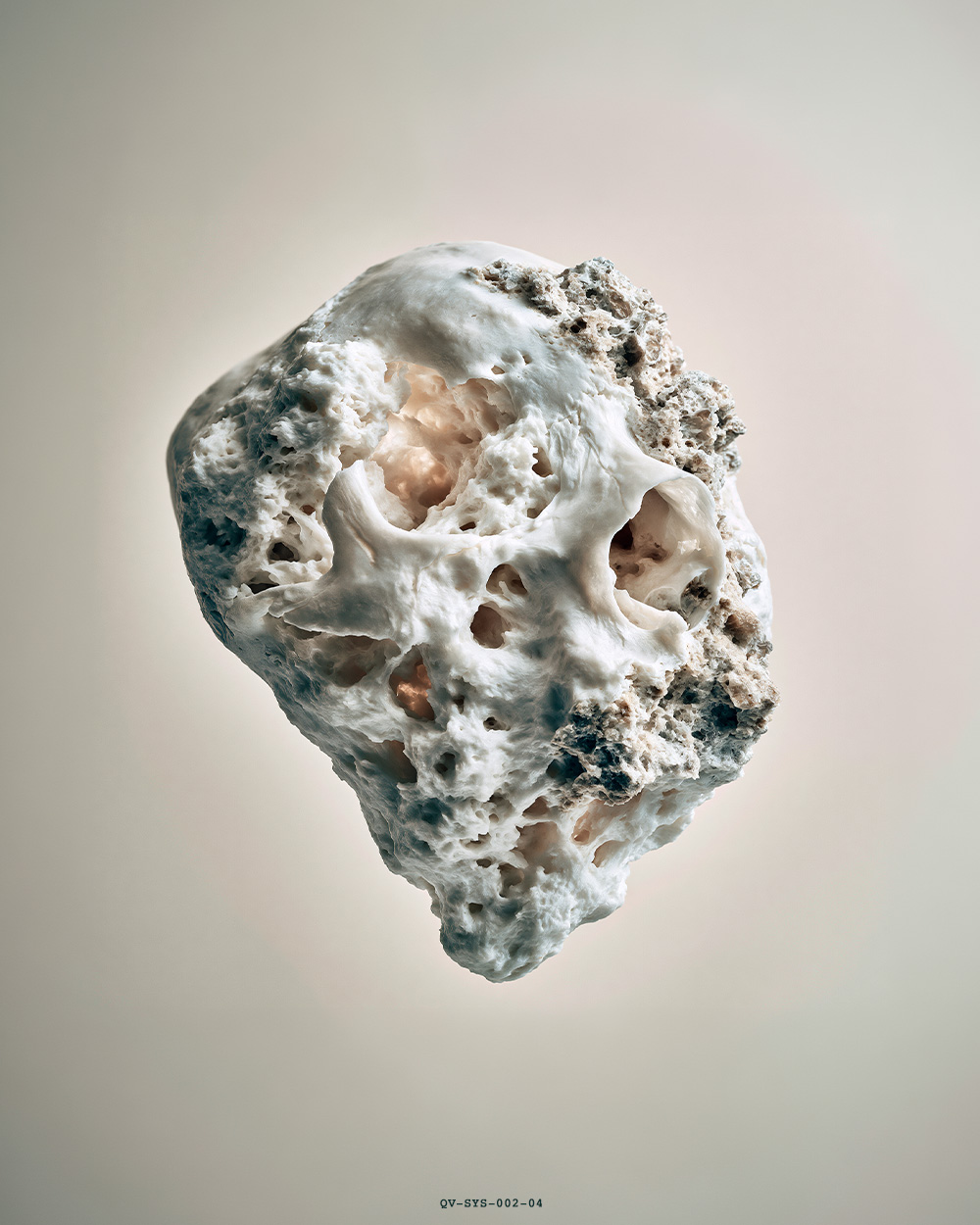
What If Perfection Is Not Nature’s Goal?
Evolution does not move toward a predetermined ideal. Every generation responds to changing environments. A characteristic that improves survival today may become a disadvantage tomorrow. Likewise, no organism can maximize every possible attribute simultaneously. Speed often comes at the expense of stability. Strength may reduce flexibility. Efficiency may decrease resilience. Living systems constantly negotiate trade-offs rather than pursuing perfection. Perhaps this is why variation appears everywhere. Not as an error. But as a prerequisite for adaptation.

Reflection
This Research Note does not argue against precision. Nor does it celebrate imperfection. Its purpose is much simpler. To question whether one of our oldest assumptions meaningfully applies to the systems we admire most. Perhaps perfection is not a biological principle. Perhaps it is simply one of the stories humans tell themselves. The investigation continues.
Continue the Research
Every Research Note documents the current state of an ongoing investigation. It is not intended as a final answer, but as an invitation to continue asking better questions.
Research Information
Research Note: RN-SYS-002
Research ID: QV-SYS-002
Collection: Visual Research
Domain: Systems Thinking
Focus: Biological Adaptation
Research Stage: Stage: Experimental
Status: Version 0.1
Last Updated: July 2026
Wo in deinem aktuellen Tun ist mehr da, als gerade sichtbar ist?
Lass uns darüber sprechen.